Modern buildings can automatically adapt lighting, temperature, and ventilation using sensors and intelligent systems.
These "smart" buildings can adjust to their occupants' needs in real time. Such innovation needs low-power wireless technologies, enabling seamless device communication while using minimal energy. This article explores how these technologies are transforming smart buildings, the importance of power efficiency, and the benefits they bring.
Importance of power efficiency in smart buildings
Smart buildings have several sensors, actuators, and connected devices that continuously collect, transmit, and process data. So, the power efficiency is crucial in these environments for several reasons:
- Extended device lifespan: Low-power wireless technologies minimize energy consumption, extending the battery life of devices like sensors, actuators, and smart meters, thereby reducing maintenance frequency and costs.
- Optimized energy usage: Power-efficient systems reduce energy waste in lighting, HVAC, and security applications by enabling intelligent control and real-time adjustments based on occupancy and environmental conditions.
- Support for dense IoT networks: Efficient power management ensures the reliable operation of densely populated wireless networks, where hundreds of devices coexist and continuously communicate without overloading the power infrastructure.
- Thermal management: Lower energy consumption minimizes heat generation, critical for wireless communication devices to maintain signal integrity and prevent thermal-induced failures.
- Sustainability goals: Power-efficient technologies directly contribute to achieving sustainability targets by reducing overall energy consumption and carbon emissions in smart building operations.
- Cost savings: Lower energy requirements translate to reduced operational costs for building owners, particularly in large-scale installations with multiple wireless systems.
Low-power wireless technologies for smart buildings
Zigbee is a low-power wireless communication protocol widely used in smart building applications such as lighting control, HVAC systems, and security.
- Technical Details: Zigbee operates on IEEE 802.15.4, supporting mesh networking with low data rates and power consumption. Considerable energy is saved as devices remain in a low-power sleep state and wake only if required.
- Benefits: Scalability, low latency, and robust mesh networking make it ideal for large-scale smart buildings.
- Real-World Example: Zigbee-based lighting systems in office buildings optimize energy use by dimming or turning off lights in unoccupied areas.
To learn more about Zigbee wireless solutions, click here.
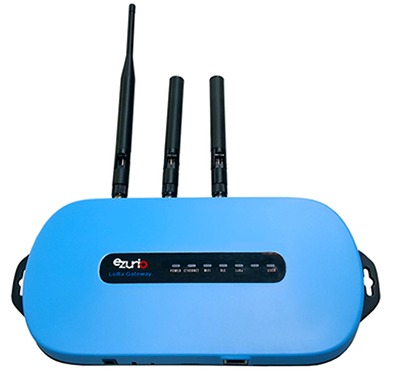
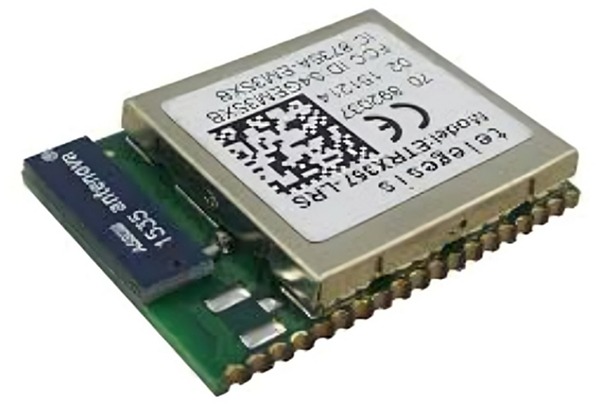
Figure 1: ETRX357HR-LRS, Zigbee Module, Em357, 2.4Ghz, U.Fl Connector
Bluetooth Low Energy (BLE): BLE is custom-built for low-power and short-range applications, making it ideal for smart locks, beacons, and environmental monitoring.
- Technical Details: BLE uses adaptive frequency hopping which reduces both interference and power consumption. It supports connectionless modes, and allows devices to broadcast data without maintaining a continuous connection.
- Benefits: High device compatibility, low latency, and suitability for mobile-controlled systems.
- Real-World Example: Smart offices use BLE beacons for indoor navigation and occupancy tracking.
Click here to learn more about BLE beacons and also learn Design Choices for Bluetooth Low Energy.
(Long Range Wide Area Network): LoRaWAN is purpose-built for long-range, low-power communication, making it suitable for building-wide or campus-wide sensor networks.
- Technical Details: LoRa uses the chirp spread spectrum (CSS) modulation, enabling devices to transmit over long distances with minimal power. It operates in unlicensed spectrum bands, reducing operational costs.
- Benefits: Long battery life (up to 10 years) and excellent penetration through walls and obstructions.
- Real-World Example: LoRaWAN sensors are deployed in smart campuses to monitor water leaks, energy usage, and air quality.
Click here to learn more about LoRaWAN.
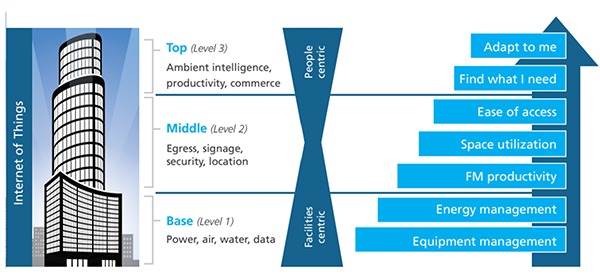
Figure 2: RG186, Wireless Gateway
Thread is a low-power mesh networking protocol for smart home and commercial applications.
- Technical Details: Built on IEEE 802.15.4, it supports IPv6, enabling direct device-to-cloud communication. Thread networks are self-healing, ensuring reliability even if some nodes fail.
- Benefits: Interoperability, scalability, and robust security.
- Real-World Example: Thread-enabled smart thermostats in commercial buildings optimize HVAC energy usage based on real-time occupancy data.
WiFi HaLow (IEEE 802.11ah) is a low-power, long-range WiFi variant designed for IoT applications.
- Technical Details: It operates in the sub-1 GHz band, providing better range and penetration than traditional WiFi. HaLow devices consume less power by supporting extended sleep modes and low data rates.
- Benefits: High compatibility with existing WiFi infrastructure and suitable for bandwidth-intensive applications.
- Real-World Example: WiFi HaLow is used in large smart buildings to connect surveillance cameras and access control systems.
| Wireless Technology | Transmit power (mW) | Receive power (mW) | Sleep mode (μW) | Power-saving mechanisms | Ideal use cases |
|---|---|---|---|---|---|
| Zigbee | 1-10 | 8-10 | 1-10 | Mesh networking, beaconing, low-duty cycle | Smart lighting, HVAC control |
| BLE | 1-5 | 4-8 | 1 | Adaptive frequency hopping, connectionless mode | Smart locks, environmental sensors |
| LoRaWAN | 100-200 | 50-80 | 1 | ALOHA model, adaptive data rate | Smart metering, leak detection |
| Thread | 1-10 | 7-9 | 1-2 | 6LoWPAN-based low-power mesh, CSL | Secure mesh networking |
| WiFi HaLow | 200-500 | 100-150 | 10-20 | Target Wake Time (TWT), sub-1 GHz operation | Video surveillance, access control |
Chart 1: Comparative analysis of power consumption
Advanced case study: Integrating LoRaWAN for Smart Building Management
A modern building in Silicon Valley used LoRaWAN to augment its smart building capabilities. It was chosen for its ability to transmit data anywhere in the building, from the basement to remote corners. LoRaWAN sensors were deployed throughout the premises, both indoors and outdoors. The sensors were powered by long-lasting batteries that significantly reduced maintenance efforts and eliminated frequent replacements—especially valuable for hard-to-access locations.
These sensors monitored several parameters, including temperature, power, and water consumption. The data collected by the sensors was directly sent to the building's "smart brain" - a cloud-based system that managers can use to analyze incoming data in real-time, enabling rapid, informed decision-making. Facility managers can quickly adjust the HVAC settings based on occupancy patterns or detect water leaks before they escalate into major insignificant.
The results of this ambitious project were impressive. The integration of LoRaWAN technology led to a 40% reduction in overall energy consumption within one year. Water use also decreased considerably due to early leak detection and real-time management. Building occupants enjoyed enhanced comfort with sensor-fed automated climate control.
The scalable nature of LoRaWAN also enabled easy expansion. The building adapted new technologies as needs arose without extensive reconfiguration. This case study illustrates how advanced low-power wireless technologies like LoRaWAN can optimize smart building management by improving efficiency and sustainability while providing a more comfortable environment for occupants.
Figure 3: A transformed Smart Building using LoRaWAN
Conclusion
Smart buildings are getting better thanks to wireless devices that use minimal power. These devices help buildings run smoothly, save energy, and become more environmentally friendly. Whether it's Zigbee for connecting many sensors, BLE for short-range communication, LoRaWAN for covering large areas, or WiFi HaLow for faster data transfer, each type of wireless tech brings something special. As we keep making buildings smarter, finding ways to reduce power consumption will stay important. This focus on saving energy while making buildings more intelligent shapes how we'll construct and manage buildings in the future. Farnell offers a variety of products in Low-Power Wireless Technologies for Smart Buildings.







Technologies







Artificial Intelligence
One of the greatest revolutions in all of human history! AI is an all-encompassing concept that incorporates human intelligence into machines
DEVKIT HQ
The #1 Destination for Embedded Evaluation Boards, Development Kits, and Tools
IoT Sensor to Cloud Platform
/IOTCONNECT™ accelerate your loT journey with secure, ready-to-use cloud connectivity
Further Resources
Calculators & Conversion Charts
Selection Guides and Catalogues
Essential Learning Modules
Tech Spotlights
Design Resources
Engineering Glossary
Technical Support
Parts Finder Tools
