Operating over a broad frequency spectrum from 3.1 GHz to 10.6 GHz, UWB is a key feature of the 802.15.4 standard for low data-rate wireless Personal Area Networks (PANs). UWB technology has seen significant advancements, incorporating secure ranging and localization based on IEEE 802.15.4a standards. Furthermore, with the introduction of the IEEE 802.15.4z standard, UWB now boasts enhanced security features, enabling centimeter-level accurate distance and location measurements.
The technical capabilities of UWB technology encompasses highly accurate distance and position measurements, making it an ideal fit for indoor navigation and asset tracking. With its wide frequency spectrum, UWB facilitates high-speed data transfer and efficient power usage, crucial for real-time monitoring and control systems. Additionally, UWB’s unique time-frequency coding methods render it inherently secure.
In practice, UWB is instrumental in indoor navigation systems, particularly in facilitating efficient asset tracking across various industries such as manufacturing, logistics, and healthcare. Its exceptional precision and accuracy make it an optimal choice for real-time data transmission and monitoring and control systems in industrial settings. UWB’s robust security protocols also ensure data integrity and confidentiality, making it a reliable option for financial transactions and secure access control systems.

Figure 1: Spectral density for UWB and narrowband (Source)
The transmission spectrum density of UWB wireless communication within a specific frequency range is shown in figure 1. Unlike conventional communication, UWB offers an incredibly wide frequency bandwidth, revolutionizing wireless communication. With UWB, users can avail of GPS-like positioning with unparalleled accuracy, even in the most challenging indoor environments. It easily navigates through crowded areas with multiple signal paths, effortlessly penetrating walls, machinery, and other obstacles.
UWB technology ensures exceptional accuracy in both Line-Of-Sight (LoS) and non-Line-Of-Sight (nLoS) scenarios, including crowded environments with numerous obstructions. Incorporating Angle-of-Arrival (AoA) technology, UWB delivers unprecedented precision, enabling centimeter-level identification and positioning of devices or objects.
How UWB technology works
A UWB transmitter uses extremely short pulses across a wide spectrum channel, allowing for high time resolution and measurement precision. The corresponding receiver translates these pulses into data by listening for a familiar pulse sequence sent by the transmitter, ensuring accuracy in time and measurement (figure 2). When UWB-equipped devices come within range of each other, they initiate a ranging process, determining precise locations for applications such as asset tracking or device localization. UWB technology, with a broad channel bandwidth of 500 MHz and short pulses of approximately two nanoseconds each, enables centimeter-level accuracy, allowing for real-time tracking of movements with high precision. UWB’s immunity to multipath effects and resilience to narrowband fading and jamming make it a very reliable technology option for various applications.

Figure 2: UWB Time of Flight (ToF) (Source)
Challenges in integrating UWB into IoT devices
UWB technology is revolutionizing IoT connectivity by offering unparalleled precision in positioning and tracking. This cutting-edge technology is perfect for asset tracking, indoor navigation, and smart home automation applications. UWB operates efficiently with low power, making it an ideal choice for battery-operated devices. Its wide frequency range and time-domain pulse nature significantly reduce the risk of signal interception. Key components for integrating UWB into an IoT device include the UWB transceiver, antenna, microcontroller, power management, sensors, actuators, and RF front-end circuitry. UWB enhances IoT capabilities by providing higher bandwidth for faster data exchange and significantly improving positioning accuracy, especially for applications that demand precise location data.
Technical Challenges
- Power consumption: UWB’s low-power characteristics are beneficial, but continuous operation in IoT devices requires advanced power management techniques.
- Antenna design: Due to UWB’s wide frequency range (3.1 GHz to 10.6 GHz), designing efficient antennas is complex. The focus is on creating antennas with a wide bandwidth, low profile, and high efficiency.
- Multipath interference occurs when radio waves are absorbed, reflected, refracted, or diffracted, leading to multiple paths for the signal to reach the receiver. Advanced signal processing techniques, such as time-of-flight measurement, channel estimation, and equalization, can help improve accuracy and reliability.
- Regulatory compliance is crucial for UWB devices operating in unlicensed spectrum, which varies across different regions. One must ensure that UWB devices meet emission levels, frequency usage, and interference mitigation requirements in each target market, adhering to standards set by regulatory bodies.
Integration methods
- Chip-level integration: UWB chips are embedded in IoT devices, enabling seamless communication and location-tracking capabilities.
- Module-level integration: UWB modules provide a plug-and-play solution for developers, simplifying the integration process.
- Software integration: UWB Software Development Kits (SDKs) enable location tracking and data transfer features.
Steps to integrate UWB into IoT devices
- Define application requirements: Determine accuracy, range, and power requirements.
- Choose a suitable UWB chipset: Select a chipset that meets the application's performance needs.
- Consider antenna design: Minimize signal loss and maximize coverage with an efficient antenna design.
- Implement power management: Use techniques to ensure low power consumption and prolong battery life.
- Integrate UWB module: Seamlessly combine the UWB module with existing components.
- Develop firmware: Handle UWB signal processing, ranging algorithms, and communication protocols.
- Use available APIs: Facilitate communication between the UWB module and the IoT platform.
- Test and calibrate: Ensure ranging accuracy and conduct interference testing.
- Deploy and maintain: Deploy UWB-integrated IoT devices, set up UWB anchors for triangulation in indoor positioning systems, and regularly update firmware and software to address bugs, improve performance, and add new features.
Application detail: Realizing accurate positioning of IoT devices
In the era of digital transformation and growing adoption of cloud services, the use of IoT devices has surged. Ultra-Wideband technology stands out for its advanced location measurement and secure communication capabilities. This paves the way for UWB wireless communication to be embraced across an even wider range of industries.

Figure 3: Type 2BP UWB module (Source)
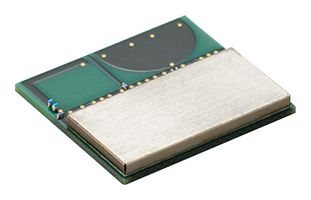
Murata has launched NXP based UWB positioning modules for precise and safe distance measurement using radio wave Time of Flight (ToF) technology. These modules are designed to meet various requirements and comply with ISO9001 specifications. The Murata Type 2BP (figure 3) is an extremely compact UWB module that incorporates NXP's SR150 chipset, clock, filter, and peripheral components. It is suitable for general IoT devices powered by batteries and supports UWB channels 5 and 9, SPI interface, three antennas (supporting 3D AoA or 2D AoA), power calibration, and Xtal calibration. The module features an ARM Cortex-M33 CPU core with 128kB code RAM and 128kB data RAM, operating over a temperature range of -30°C to 85°C. It supports SMT mounting and is housed in an LGA package measuring 6.6 × 5.8 × 1.2 mm, with a 1.8V supply voltage.

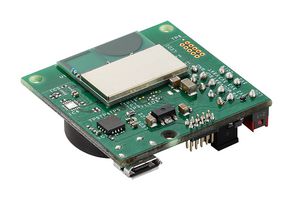
Figure 4: Type 2DK UWB Module (Source)
The Murata Type 2DK (Figure 4) is a multifunctional module that combines UWB and Bluetooth® LE. It includes the NXP Trimension™ SR040 UWB Chipset, NXP QN9090 (Bluetooth® LE + MCU chipset), integrated onboard antenna, and other components. This module is perfect for UWB Tag/Tracker devices that run on coin-cell batteries, as well as general IoT devices. It comes with an integrated UWB/Bluetooth LE onboard antenna and is designed to operate efficiently with low power consumption using a coin-cell battery.





Technologies








Artificial Intelligence
One of the greatest revolutions in all of human history! AI is an all-encompassing concept that incorporates human intelligence into machines
DEVKIT HQ
The #1 Destination for Embedded Evaluation Boards, Development Kits, and Tools
IoT Sensor to Cloud Platform
/IOTCONNECT™ accelerate your loT journey with secure, ready-to-use cloud connectivity
Further Resources
Calculators & Conversion Charts
Selection Guides and Catalogues
Essential Learning Modules
Tech Spotlights
Design Resources
Engineering Glossary
Technical Support
Parts Finder Tools
