



















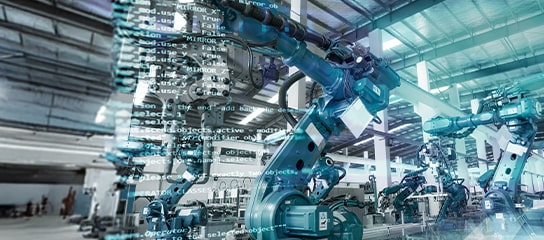
By combining the advantage of Industry 4.0 models with advanced data analytics, Artificial Intelligence (AI) and Industrial Internet of Things (IIoT) we can introduce speed and precision to a wide range of factory operations, enhancing productivity and reliability. The rapid evolution of this technology and its integration across the enterprise is reshaping the ways manufacturers operate and produce high-quality goods.
Benefits include:
- Reduced periodic and manual checking
- Increased productivity
- Reduced production cost
- Improved product quality
- Increased flexibility
- Improved safety
Outlined below are three main levels of industrial automation applications:
Level 1 - Supervisor Level:
Mainly PC-based systems, such as industrial PCs (rack-mounted and panel) equipped with supplier-specific industrial process-control software for process parameterization and visualization. The intercommunication is based on a Gbit LAN or higher bandwidth backbone or Wireless topologies (WLAN). To avoid data loss and for safety reasons, Uninterruptable Power Supplies (UPS) are installed.
Core Components: Industrial PC, Panel PC, HMI, WLAN
Level 2 - Control Level:
This is the automation systems level where automation programs are executed. Systems on this level require high real-time capability and are based on a special controller architecture with its own proprietary OS running on it. High real-time compliant intercommunication bus protocols (according to IEEE 1588) are essential here.
Core Components: PLCs, HMI, Field Bus (CAN, EtherCAT, Profibus etc ), WLAN, Safety (SIL).
Level 3 - Field Level:
This level includes all terminal equipment, such as sensors and actuators collaborating with a peripheral PLC or remote I/O system, offering pre-procession of the collected data and communication to the main PLC via field bus.
Core Components: Micro PLC, Motor Control, Industrial Sensors, Actuator Drivers, Relays, Switches, Wireless Control (RFID, wireless sensor networks using IEEE 802.15.4 topology)
Mostrar más

Choose from over 220K available industrial products

Over 42 industrial manufacturers including Schneider Electric, Honeywell, Festo and Omega

Continue to invest in our industrial product range – up by 50% for the past 12 months
Interactive Control Panel
Explore our newly launched Interactive Catalog for Industrial Control Panels, showcasing the most advanced and top-tier products essential for constructing and sustaining your panels. Experience a comprehensive solution from a single supplier, ensuring high-quality and economical solutions for all your control panel applications
Interactive Production Line
Explore our Interactive Catalog for Industrial Production Lines featuring cutting-edge solutions to optimise your production processes. From state-of-the-art sensors to advanced automation tools to industrial connectivity. Seamless experience with just a click
Somos Industriales, Control de Motores, Sensores, PLCs, Controladores y SBCs

Industrial smart Energy Efficiency Solutions
Motors & motor controllers, VSF Drivers, PLCs, Power, Sensors

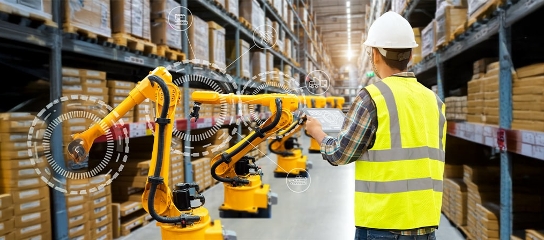

Manufacturing Solutions Minilog
With the advancement of Industry 4.0, we understand the ever-growing need for innovative and efficient manufacturing solutions. We are committed to providing high-quality products that streamline your manufacturing processes, reduce downtime, and increase productivity
Innovation Expert Podcasts
Explore the latest innovations in the world of electronics. Series 2 – Industry 4.0 and the Future of Manufacturing investigates how some of the world’s leading electronic component and solution manufacturers are enabling technological innovation in the Industrial Internet of Things (IIoT)
e-TechJournal: Driving Motor Control
Empowering precision, efficiency, and adaptability for industrial automation
Featured Products















Featured Content
How-to

How to implement AR in process control applicationAugmented Reality (AR) systems are now mature technologies that have been used in a range of manufacturing settings aim to serve a variety of product life cycle challenges. This blog explains how to employ augmented reality (AR) in an Industry 4.0 environment from product design, production planning and control to product maintenance.
How-to

How to establish control access to shop floor systems via gatewaysLearn how to set up control access to shop floor systems via gateways to uncover valuable data generated by existing operational technology, allowing businesses to monetise it even more using information technology.
How-to

How to Pub/Sub using Fieldbus Technology for Industrial NetworksPublish/subscribe enables next-generation IIoT and Industry 4.0 applications such as predictive maintenance and flexible production by providing real-time data exchange and more flexibility. Learn How to implement Publish/Subscribe in industrial networks using fieldbus technology.
How-to

How to implement different types of edge computing for Smart factory applicationEdge computers are complex systems that track and monitor the health of all types of edge devices to preserve the equipment and make key choices locally to reduce downtime in real time. This How-To will show you how to implement types of edge computing for Smart Factory applications to maximize its potential for your business.
Article

Optimise your workspace: Rack solutions for enhanced productivityDiscover how to choose the right rack solutions for IT, T&M, and industrial needs to boost productivity and efficiency. Learn key rack standards and features.
Guides

A comprehensive guide on industrial circuit breakersExplore industrial circuit breakers: types, applications & selection guide. Learn how these resettable switches protect your electrical systems from overcurrent damage.
Article

Top trends of ongoing evolution of industry 4.0.Discover how Industry 4.0 is revolutionizing manufacturing with real-time data, AI, and IoT, optimizing operations, reducing downtime, and integrating advanced tech for smart factories.
Article
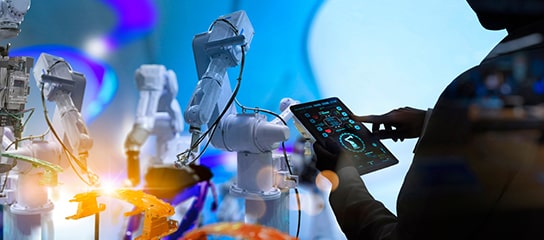
Integrating Single Board Computers for Machine Vision in Industrial AutomationExplore the power of Single Board Computers (SBCs) in revolutionizing industrial automation through Machine Vision. Enhance efficiency, reduce downtime, and embrace Industry 4.0 with our insightful guide.



Build and maintain your industrial control panel for 20% less*
*Typically 20% less than other brands
Design Build Maintain
Solutions for every stage of your product lifecycle & operations
Inteligencia artificial
¡Una de las más grandes revoluciones en la historia de la humanidad! La inteligencia artificial es un concepto integral que incorpora la inteligencia humana a las máquinas
Central de embebidos
Estamos aquí para ayudarle a dar vida a sus diseños apoyándole en todas las etapas






Tecnologías




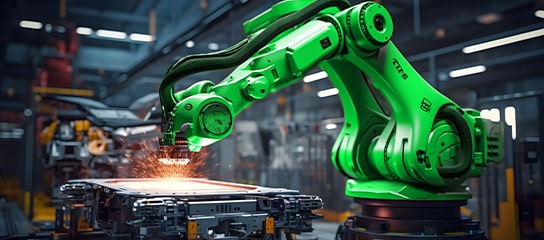


Inteligencia artificial
¡Una de las más grandes revoluciones en la historia de la humanidad! La inteligencia artificial es un concepto integral que incorpora la inteligencia humana a las máquinas
DEVKIT HQ
The #1 Destination for Embedded Evaluation Boards, Development Kits, and Tools
IoT Sensor to Cloud Platform
/IOTCONNECT™ accelerate your loT journey with secure, ready-to-use cloud connectivity
Further Resources
Calculators & Conversion Charts
Selection Guides and Catalogues
Essential Learning Modules
Tech Spotlights
Design Resources
Engineering Glossary
Technical Support
Parts Finder Tools
Recursos técnicos
Explore nuestra biblioteca cuidadosamente seleccionada de documentos técnicos, artículos técnicos, videos, módulos de capacitación, tutoriales y mucho más para ayudarle a desarrollar sus diseños, su negocio y su profesión.

La más grande comunidad online de ingenieros
CONÉCTESE | APRENDA | CREE | INSPIRE